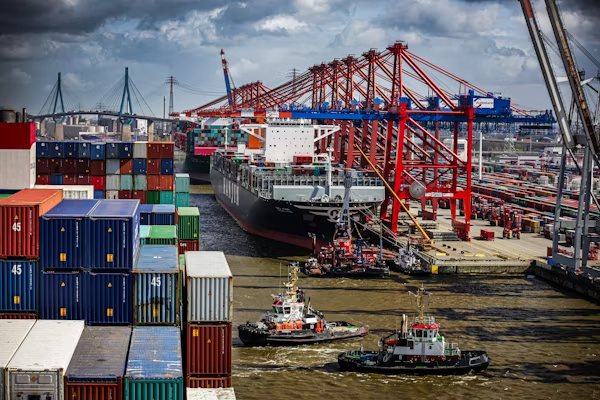
Overview of International Trade in 2025
In 2025, trade agreements must negotiate a challenging environment that includes supply chain resilience, tariff wars, and geopolitical tensions. Despite trade obstacles, the world economy is expected to expand by 3.1%, making bilateral EU pacts, the USMCA, and the CPTPP vital stabilisers 812.
This 2,500+ word guide discusses:
- Key trade agreements for 2025 (details, signatories, and economic effects)
- Tariff wars and their effects on GDP (e.g., U.S. tariffs averaging 17.7%) 7
- Trade agreements benefiting emerging markets (Brazil, India, Vietnam) 9
- Frequently asked questions about compliance, sectoral changes, and upcoming trends
- Trade outlook report available for free download
1. The Most Important Trade Agreements of 2025
A. The United States-Mexico-Canada Agreement, or USMCA
- Important Point: In order to be eligible for tariff-free trade, auto rules of origin must have 75% regional content.
Impact in 2025:
- +2.1% increase in manufacturing production in North America 7.
- Tensions 15 were caused by Canada’s 25% tariff on U.S. potash.
B. The Comprehensive and Progressive Trans-Pacific Partnership, or CPTPP
- Members include Mexico, Vietnam, Japan, Australia, and eight other countries.
- Focus for 2025: Exemptions for digital trade and e-commerce 9.
- GDP Boost: As a result of tariff reductions 9, Vietnam’s exports increased 12% year over year.
C. Trade and Cooperation Agreement between the EU and the UK
Adjustments Following Brexit:
- 10% tax on British automobiles (exempt in the US for 100,000 units) 11.
- Despite the initial Brexit shocks, the UK economy is expected to grow by +0.2% over the long run.
2. Economic Repercussions of Tariff Wars
A. Escalation of U.S. Tariffs
- 17.7% is the average rate, the highest since 1934. 7.
Sectoral Effects:
- Prices for clothing have increased by 18%.
- Car costs +$4,500 for each car 15.
B. Retaliatory Actions
- Canada: Levied 25% tariffs on American energy and potash.
- EU: To avoid higher tariffs, invest $600 billion in American energy 11.
C. The Impact of GDP on Employment
| Region | GDP Impact (2025) | Job Losses |
|---|---|---|
| U.S. | -0.5% | 505,000 |
| Canada | -2.1% | 210,000 |
| EU | +0.1% | Minimal |
3. New Trade Prospects and Markets
A. The Manufacturing Boom in Vietnam
- Benefit of CPTPP: Tariff reductions 9 result in a 37% increase in textile exports.
- Challenge: Growth 11 is threatened by U.S. “reciprocal tariffs.”
B. The Tech and Pharma Boom in India
- The United States has raised its tariffs on Indian goods from 25% to 50%. 7.
- Possibility: Exports of generic medications cover the voids left by China 9.
C. The Agricultural Advantage of Brazil
- EU-Mercosur Agreement: European soybean exports worth $4 billion annually 12.
4. Prospective Patterns and Hazards
A. Trade Compliance and AI
- Tools: AI optimises supply chains and forecasts tariff exposures 9.
- For instance, ChatGPT looks for loophole 9 in trade agreement clauses.
B. Trade Policies Associated with Climate Change
- By 2026, the EU’s Carbon Border Tax will impose a 20% tax on imports with high emissions.
C. Risks of Fragmentation
“Deep” versus “Shallow” Agreements:
- Because of tariff volatility, shallow agreements (like the USMCA) are less stable 12.
- Deep (like the EU): More robust but more difficult to bargain with 12.
FAQs
A: The e-commerce regulations of the CPTPP lower obstacles for small exporters 9.
A: According to Yale Budget Lab, supply chains need at least three years to adjust. 7.
A: In fact, low-income households pay 3.5% of their income, while high-earners pay 1%.
Free Trade Outlook Report for 2025
- Tariff impact calculators and tables for comparing agreements
- Risk assessments by sector