Introduction:
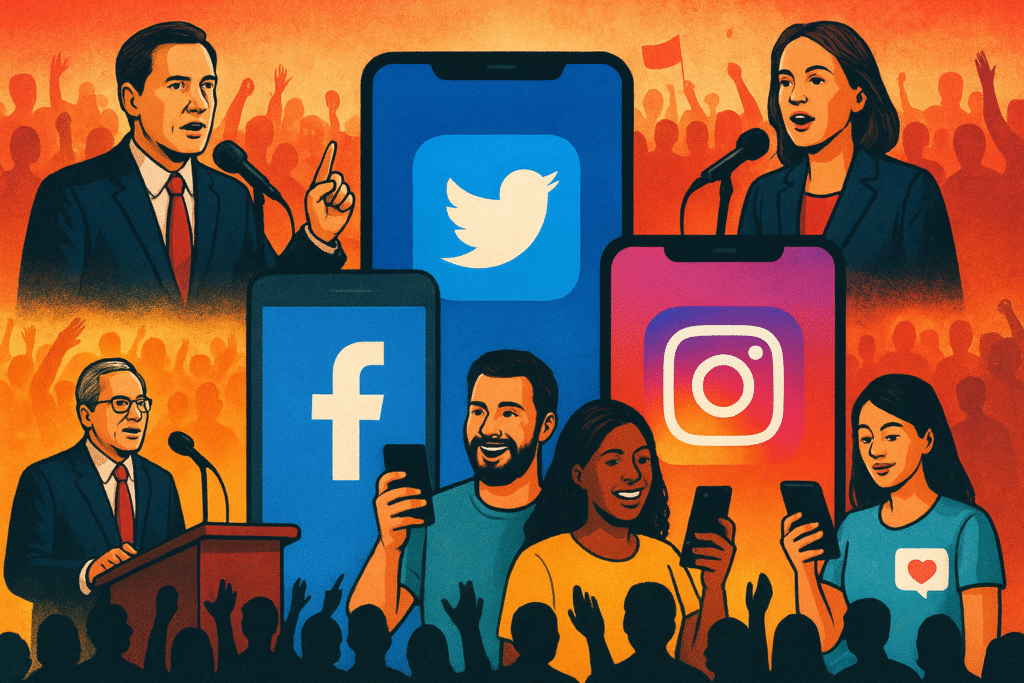
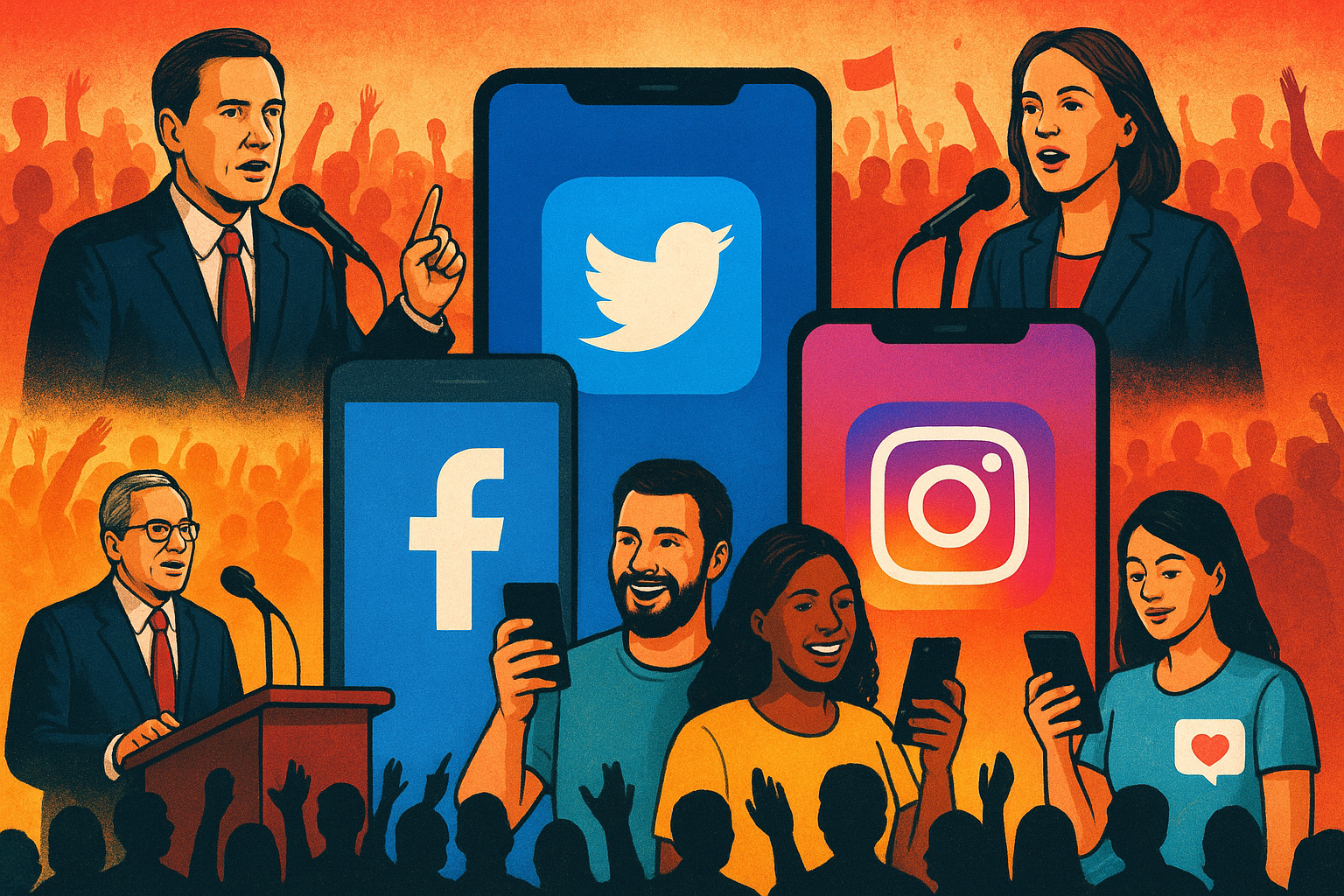
Over the past decade, social media has transformed political campaigning. From the Obama campaign of 2008 to modern elections globally, sites such as Facebook, Twitter/X, Instagram, and TikTok have become political parties’ and candidates’ go-to tools to engage directly with the electorate, create narratives, and mobilize supporters.
This article discusses the strategic application, advantages, disadvantages, and future prospects of social media in political campaigns, providing a comprehensive guide to politicians, campaign managers, and voters.
1:The Evolution of Political Campaigning
From Traditional to Digital:
Traditionally, political campaigns relied heavily on door-to-door canvassing, print media, TV ads, and public rallies. While these methods are still important, digital campaigning—particularly via social media—has added speed, scale, and precision.
Key Milestones in Social Media Politics:
| Year | Event | Impact |
|---|---|---|
| 2008 | Barack Obama’s use of Facebook & YouTube | Pioneered online fundraising and grassroots mobilization |
| 2016 | Donald Trump’s Twitter strategy | Showed the power of direct, unfiltered communication |
| 2019 | Indian Elections & WhatsApp | Highlighted the role of private messaging in mass outreach |
| 2020 | TikTok & Instagram activism | Younger demographics entered political debates |
2:Why Social Media Matters in Political Campaigns:
Social media has certain benefits over legacy campaign practices.
Direct Address:
Politicians cut out middlemen media, talking to fans in their own voice.
Affordability:
Online advertising is less expensive than TV or print, enabling minority parties to be heard.
Instant Feedback:
Seamless response to speeches, debates, or announcements of policy.
Viral Potential:
Millions of people can be reached overnight by a single video or tweet, shifting opinion quickly.
3:Platforms and Their Political Strengths:
| Platform | Strength for Campaigns | Example Usage |
|---|---|---|
| Wide demographic reach, event promotion | Rally invitations, fundraising | |
| Twitter/X | Quick news updates, political commentary | Live-tweeting debates |
| Visual storytelling, younger audience | Behind-the-scenes campaign moments | |
| TikTok | Creative short videos, Gen Z engagement | Political satire, campaign challenges |
| YouTube | Long-form speeches, documentaries | Candidate interviews, policy explainers |
4:Social Media Campaign Strategies:
- Targeted Advertising
Platforms enable campaigns to micro-target voters by location, age, interests, and politics.
- Storytelling
Telling relevant stories makes candidates more relatable.
- Hashtag Campaigns
Fosters viral engagement (#VoteForChange, #YouthForFuture).
- Influencer Collaborations
Collaboration with social influencers to amplify reach.
- Live Streaming
Facebook Live, Instagram Live, and YouTube streams facilitate live Q&A sessions.
5:The Impact of Social Media on Voter Behavior
Research indicates social media has the potential to impact political views, especially among undecided voters.
- Supportive posts enhance candidate likability.
- Negative campaigning may deter voting by supporters of opponents.
- Echo chambers reinforce existing conviction.
6:Case Studies
Barack Obama (2008 & 2012)
- Organized youth voters via Facebook and YouTube.
- Raised record small-dollar contributions.
Narendra Modi (India, 2014 & 2019)
- Utilized Twitter and WhatsApp groups for continuous voter interaction.
Alexandria Ocasio-Cortez (USA)
- Instagram Live and TikTok increased relatability and authenticity
7:Social Media vs Traditional Media in Campaigning
| Feature | Social Media | Traditional Media |
|---|
| Cost | Low | High |
| Speed | Instant | Delayed |
| Reach | Global | Regional/National |
| Interactivity | High | Low |
| Targeting | Specific | Broad |
8:FAQs
Depends on the audience—Facebook for older voters, TikTok/Instagram for younger voters.
Yes. Targeted campaigns and viral stories have influenced undecided voters in several elections.
Through fact-checking, reporting fake content, and issuing disclaimers promptly.
It’s moral if open, lawful, and true.
AI will bring better targeting and personalization, but human strategy will remain crucial.