Introduction
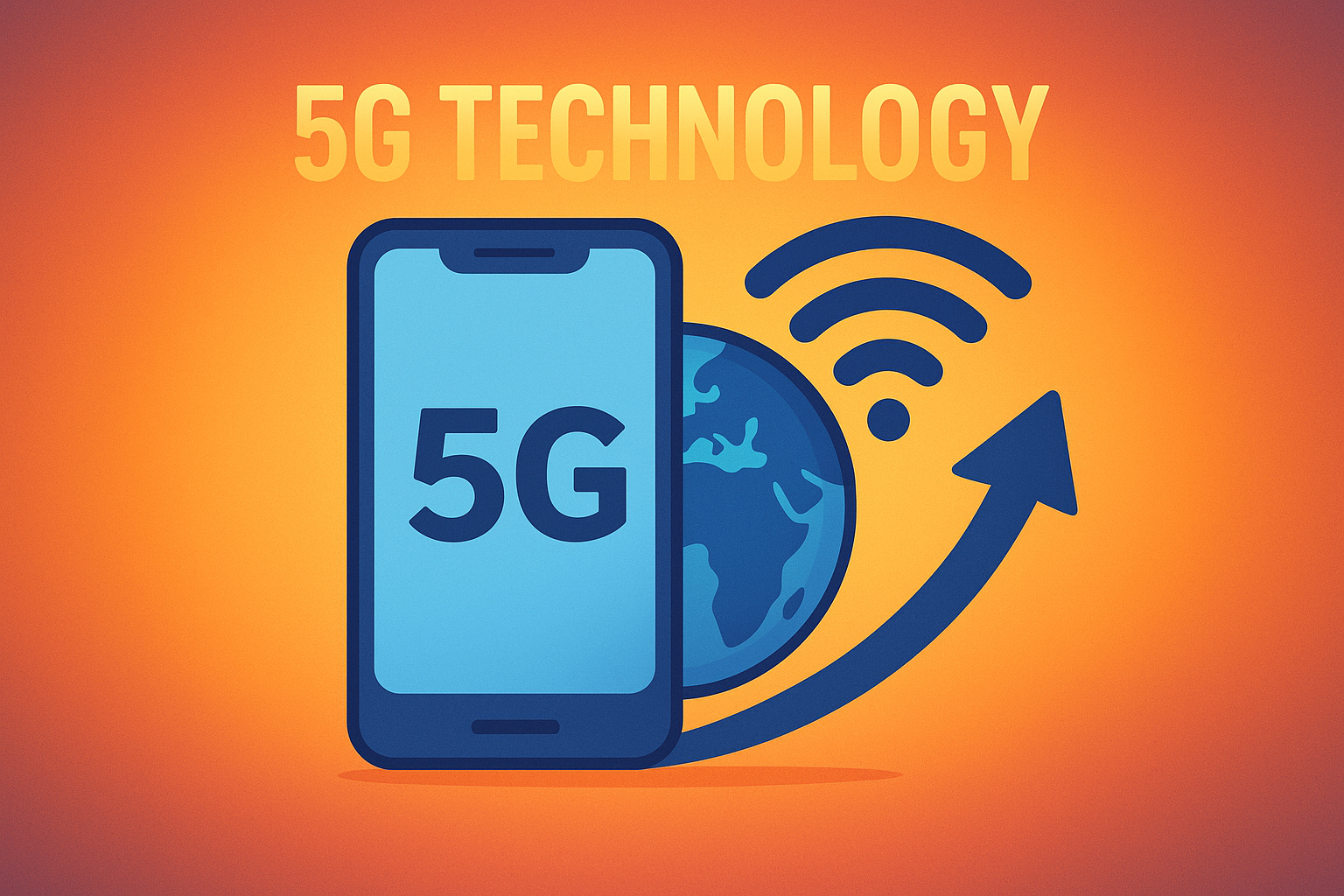
5G is the fifth generation of wireless telecommunication networks. It is not just for quicker browsing and streaming, as its predecessors were, but also to support billions of connected devices at the same time. Thus, it becomes a basis for smart cities, autonomous vehicles, telemedicine, and future IoT ecosystems.
The development of mobile networks has been instrumental in determining how people interact, communicate, and do business. Following the 3G and 4G era, the emergence of 5G technology has staged a revolution in digital connection. In 2025, 5G is no longer a promise—it’s a reality that is revolutionizing industries, economies, and lives globally.
Key Features of 5G Connectivity
- Ultra-fast speeds (up to 10 Gbps)
- Low latency (1 millisecond delay)
- Massive device connectivity (supporting IoT devices at scale)
- Improved reliability
- Improved bandwidth efficiency
5G vs 4G: What Makes It Different?
| Feature | 4G LTE | 5G Technology |
|---|---|---|
| Speed | Up to 100 Mbps | Up to 10 Gbps |
| Latency | 30-50 ms | ~1 ms |
| Device Capacity | Limited | Massive IoT support |
| Coverage | Wide but slower | Ultra-dense, urban focus |
| Applications | Browsing, streaming | AR/VR, IoT, AI, smart cities |
The Role of 5G in Enhancing Internet Speed
Among the most evident transformations introduced by 5G is record internet speed. At a minimum of 100 times faster than 4G, it makes possible:
- Seamless 4K/8K streaming
- Instant cloud-based gaming
- Lag-free real-time video conferencing
- Smooth use of VR/AR applications
Impact of 5G on Businesses
Companies across the globe are using 5G to boost productivity, cut costs, and enhance customer experience.
Benefits for Businesses:
- Easier communication among global teams
- Automation using AI through connected devices
- Intelligent supply chains with real-time location tracking
- Improved e-commerce experience through AR shopping
5G and Healthcare: A Digital Revolution
Healthcare is being revolutionized by 5G through remote surgeries, telemedicine, and AI-driven diagnosis.
- Surgeries can be conducted remotely with robotic equipment.
- Patients can get real-time health monitoring using IoT devices.
- Emergency response teams can share live HD feeds with hospitals.
Education in the 5G Era
With 5G, education has become more immersive and accessible:
- Virtual classrooms using VR headsets
- Seamless remote learning without connectivity issues
- Access to AI tutors and global experts in real-time
5G and the Internet of Things (IoT)
5G is the backbone of IoT. Billions of devices—smart homes to self-driving cars—depend on its speed and reliability.
Examples:
- Smart homes: Automated appliances, security systems
- Self-driving cars: Instant decision-making through real-time data
- Smart factories: Robotics and AI integration
Smart Cities Powered by 5G
5G is the basis of smart cities where traffic lights, energy grids, and surveillance systems are networked together.
Benefits include:
- Less traffic congestion
- Effective waste management
- Enhanced public safety
Cybersecurity Concerns with 5G
Although its benefits, 5G also presents hazards:
- More devices connected = more vulnerable attack points
- Data privacy issues
- Need for sophisticated encryption and AI-based security
World 5G Adoption in 2025
By 2025, more than 2 billion people in the world will be using 5G. Top nations are:
- United States
- China
- South Korea
- United Kingdom
- Germany
Challenges and Limitations of 5G
- Exorbitant infrastructure costs
- Limited rural penetration
- Interoperability with legacy devices
- Health and environment controversies
Future Predictions of 5G Technology
- Convergence with 6G research by 2030
- Growth of metaverse apps
- Autonomous cars in 5G-integrated smart cities
- Mass AI + 5G networks
Frequently Asked Questions (FAQs)
5G is as much as 100 times faster than 4G, with speeds of up to 10 Gbps.
Scientific research has discovered no established adverse health impact from 5G radiation within worldwide safety limits.
It makes it easier for small companies to implement AI, e-commerce technologies, and cloud computing more effectively.
Not necessarily. There will still be Wi-Fi, but 5G can eliminate reliance in most places.